Book a tour
A private Boyne Valley tour can include Dowth as the quieter of the three great Brú na Bóinne mounds. The site is about an hour north of Dublin. We collect you from your hotel in the morning and return you that evening, so you can walk the third World Heritage mound without driving or watching the clock.
Most first-time visitors spend about three hours at Brú na Bóinne, including the visitor center and the OPW-guided visits to Newgrange and, when it is open, Knowth. Dowth is not on that shuttle circuit. It sits nearby as a separate roadside stop, often after the ticketed World Heritage visit or as a later extra stop with Tara or Slane.

Aerial view of the 5,200-year-old passage tomb at Dowth at sunrise.
The exterior is generally free to visit. There is no ticket booth on site, and visitors do not enter the passages or chambers on a standard day. Newgrange and Knowth still need Brú na Bóinne tickets when those sites are on your day. We purchase those required tickets on your behalf, subject to availability. Time is allowed for lunch, although meals are not included in the tour price.
The visit involves walking on grass and uneven ground around the mound. Archaeological sites offer little shelter, so bring sturdy shoes and an extra layer. We can customize later stops if you prefer less walking.
What you will see at Dowth
A typical visit is outdoor and self-paced. You can walk around the mound, look for kerbstones, and take in views across the Boyne Valley. Visitors do not enter the passages or chambers on a standard visit. There is no OPW shuttle stop here in the same way as Newgrange and Knowth. The experience is quieter, and it helps to know that before you arrive.
The mound and its scarred summit
From the roadside and the grass paths, Dowth reads as a broad green hill rather than a rebuilt facade. The crater-like hollow on top is the mark of an 1847 excavation and later stone removal, not a Neolithic design feature. Even so, the mound’s bulk is clear: about 85 meters (280 feet) across and about 15 meters (50 feet) high, comparable in overall scale to Newgrange.
The Dowth mound rising above the surrounding fields
Entrances, passages and what stays closed
On the western side you can see stone-framed entrances. Dowth North and Dowth South both open from this flank. Inside, the northern tomb has a longer passage and a cruciform chamber. The southern tomb is smaller, with a short passage and a round chamber whose original corbelled roof is no longer intact. A later Iron Age souterrain also cuts into the western edge of the mound. From outside you see lintels, kerbs and gated openings. You do not go in.

The stone entrance at Dowth with gorse in bloom on the mound
Kerbstone 51 and megalithic art
Dowth has less outdoor art than Knowth, but what is here is memorable. Kerbstone 51, often called the Stone of the Seven Suns, carries radiating circular motifs that many visitors read as solar symbols. Other kerbstones show cup marks, arcs and related designs. Walking the perimeter with good light is the best way to find them, because grass and weathering can hide detail until you are close.

Kerbstone 51 at Dowth, the so-called Stone of the Seven Suns
Winter sunset and a different solar story
Dowth South is associated with the setting sun around the winter solstice. In the days near 21 December, low western light can reach into that chamber in a way that complements Newgrange’s famous midwinter sunrise. The effect is often described as more gradual than Newgrange’s brief beam. For ordinary visits, treat this as part of Dowth’s meaning and research history, not as a guaranteed chamber experience. Confirm any special seasonal arrangements with the OPW if that is central to your trip.
How a private day usually runs
A full private day from Dublin usually starts with Brú na Bóinne. That block often takes about three hours, including the exhibition. Newgrange is the main OPW-guided visit. Knowth is included when it is open.
Dowth can follow that World Heritage visit as a quieter outdoor stop, or sit later with the Hill of Tara and the Hill of Slane. This is a private tour, so you can choose other Boyne Valley sites instead. Two extra stops after Brú na Bóinne are realistic.
Wear shoes for grass and uneven ground. Bring a layer. The valley is open country, weather moves fast, and shelter at the monument is limited.
What Dowth is
Dowth is one of the three great Neolithic passage tombs of Brú na Bóinne, a UNESCO World Heritage Site. Built around 3200 BC, it stands with Newgrange and Knowth on the northern side of a great bend in the River Boyne. The Irish name, Dubhadh, is linked in medieval tradition with darkness. In the place-name lore, a king tried to hold the sun so a great tower could be finished in one day. Night fell early, the work stopped, and the place took its name. It is story rather than excavation report, yet it fits a site whose strongest solar association is with winter sunset rather than the famous sunrise at Newgrange.
The mound holds two separate tombs on its western side, known as Dowth North and Dowth South. Both look toward the western horizon. Unlike Knowth and Newgrange, Dowth has never had a full modern excavation and restoration. Nineteenth-century digging, including the use of explosives in 1847, left a deep hollow in the center of the mound and removed a great deal of archaeological evidence. What remains is still immense, and much of the monument stays archaeologically intact beneath the grass.
Nearby earthworks such as Dowth Henge and the wider Dowth demesne show that this corner of Brú na Bóinne held ritual and later estate life for a long time. For a first visit, the main mound and its kerb walk are enough.

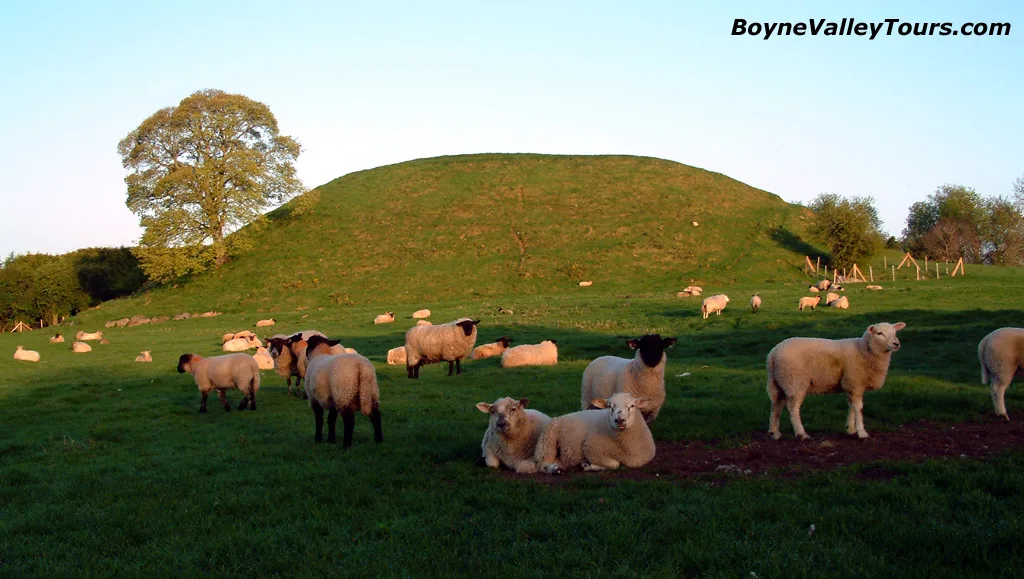
Sheep grazing beside the Dowth passage tomb

Dowth Henge in the surrounding Boyne Valley landscape
Dowth FAQ
Planning the visit
How does Dowth fit a private day from Dublin?
The Boyne Valley is about one hour north of Dublin. Your private tour includes hotel pickup and return that evening. Dowth is a separate roadside stop, not part of the visitor-center shuttle. It often sits after Newgrange and Knowth, or later with Tara or Slane.
How long should we allow at Dowth?
Plan about 30 to 45 minutes for the outdoor walk, or longer if you want time at the decorated kerbstones and viewpoints.
Who guides us at Dowth?
Your private guide walks the exterior with you and sets the mound in the valley story. There is no OPW shuttle tour here. At Newgrange and Knowth, onsite guiding is by OPW guides within the UNESCO visit system.
Can we go inside?
No. On a standard visit, guests do not enter Dowth’s passages or chambers. You see entrances and kerbstones from outside.
Tickets
Do we need tickets for Dowth?
No. The exterior is generally free to visit. There is no ticket booth on site. Newgrange and Knowth still need Brú na Bóinne tickets when those sites are on your day. Many outdoor Boyne Valley monuments do not need an entry ticket.
Is Dowth on the Brú na Bóinne Visitor Center tour?
No. The visitor center system focuses on Newgrange and Knowth. Dowth is visited separately by road.
Is Dowth worth visiting if we are already seeing Newgrange and Knowth?
Yes, if you want the third great mound and a quieter outdoor circuit. Dowth is less restored, free to walk outside, and helps complete the Brú na Bóinne picture.
Walking
How much walking is involved?
Expect outdoor walking on grass and uneven ground around the mound. Shelter at the monument is limited, so bring a waterproof jacket and an extra layer.
Can the day be adjusted for mobility or personal interests?
Yes. This is a private tour, so we can customize later stops. Tell us if you prefer less walking, more time at one site, or a different mix of tombs, abbeys or later history.
Lunch and other practical questions
Is there time for lunch?
Yes. We stop for lunch during the day. The tour price does not include meals.
Are tolls, fuel and parking included?
Yes. All car expenses are covered by the tour price, including tolls, fuel and parking.
Is it aligned like Newgrange at the solstice?
Dowth South is linked with winter solstice sunset, while Newgrange is famous for midwinter sunrise. Do not expect a routine public chamber visit at Dowth for that event. Check current OPW arrangements if special access matters to you.
Visit Dowth with Boyne Valley Tours
Enjoy a private day from Dublin. We handle the driving and the timing. Dowth itself does not need a ticket. If the day also includes Newgrange or Knowth, we purchase those Brú na Bóinne tickets on your behalf, subject to availability. After the World Heritage visit, many guests choose Dowth, Tara or Slane. Tell us if you want less walking, more abbeys or a quieter tomb instead. You can see the wider choice of Boyne Valley sites on the companion page.

Newgrange & Boyne Valley

8hrs | €700 + Booking Fees


Boyne Valley Castles & Abbeys
8hrs | €700 + Booking Fees

Meath Megalithic Sites
8hrs | €700 + Booking Fees

Glendalough & Scenic Wicklow
8hrs | €700 + Booking Fees

Wicklow Gardens & Scenery
8hrs | €700 + Booking Fees

Cruise Excursions
8hrs | €700 + Booking Fees